- USC promotes pigeonpeas. And why not.
- “Agrobiodiversity Management for Food Security: A Critical Review” by J M Lenné and D Wood hits newsstands.
- How ICRAF intends to stop agroforestry being marginalized in the new CGIAR. Their words (more or less), not mine.
The morality of data trawling
Is it morally questionable for a genebank to trawl the internet for information from other researchers about its accessions? Ruaraidh thinks maybe, Robert that it would be morally questionable not to do so. Read the full exchange in the comments to our recent post about germplasm documentation being a two-way street. What do you think?
Diversity everywhere
We cannot be the only ones to have noticed that in the past couple of weeks there has been a spate of papers on different aspects of the link between plant diversity and ecosystem functioning:
- The functional role of producer diversity in ecosystems.
- Does plant diversity benefit agroecosystems? A synthetic review.
- Why intraspecific trait variation matters in community ecology.
- Genotypic richness and dissimilarity opposingly affect ecosystem functioning.
Needless to say, we’re working our way through that little lot, so you wont have to. More soon. Unless, that is, someone out there wants to do the honours?
Nibbles: Buffalo, Future plants, Thai rice
- The International Buffalo Knowledge Resource Service has a website. No, really.
- Plants for a Future website includes crop wild relatives. No, really.
- Thai jasmine rice trademark pirated. No, really?
Mapping drought risk
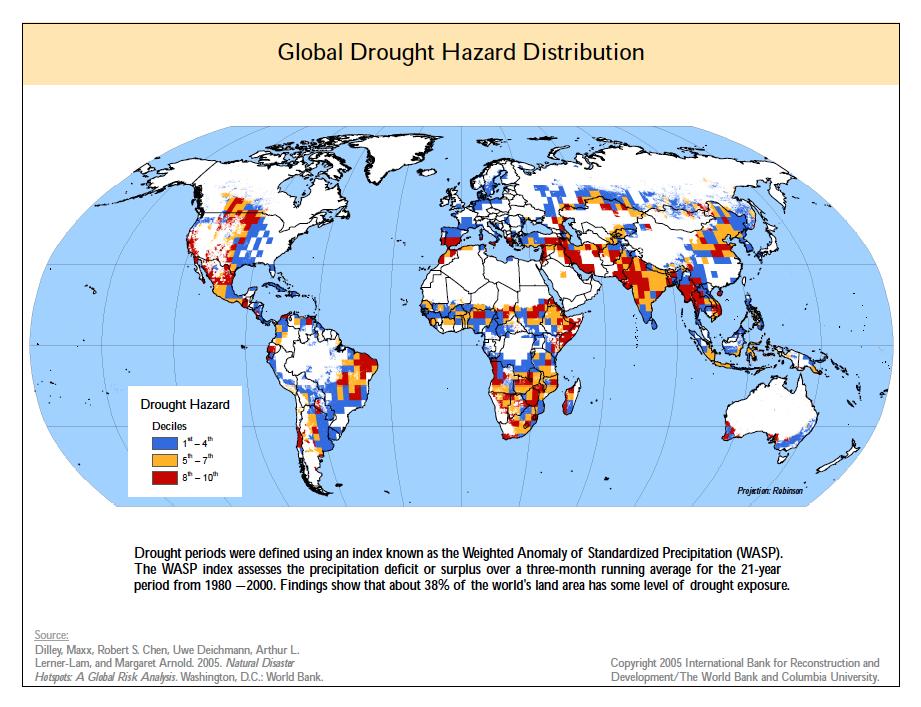
Just a quick follow-up to the rhyming couplet on water-related stresses in the just-published Brainfood. The Center for Hazards and Risks Research (CHRR) at Columbia University, which we have mentioned here before in connection with tsunami risk, also has data on Global Drought Hazard Distribution.
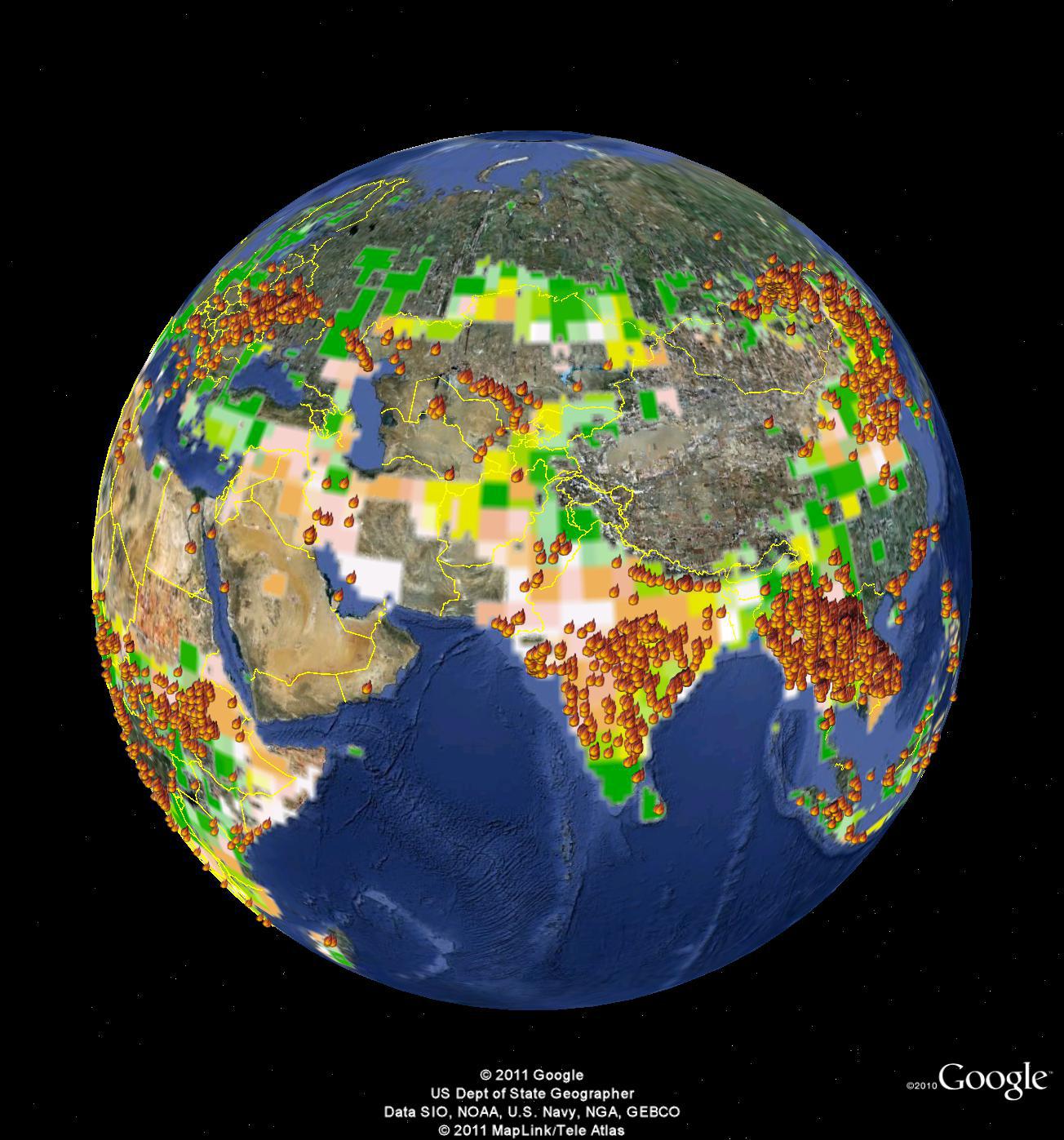
With a little R-related effort by Robert 1 you can get a Google Earth file, which looks like this for Asia. 2 I’ve also added MODIS fire hotspots for the past 24 hours, merely because I can. That would be the little fire icons.
And that means you can mash up drought risk with germplasm origin (from Genesys, say), in this case from Chad as an example.
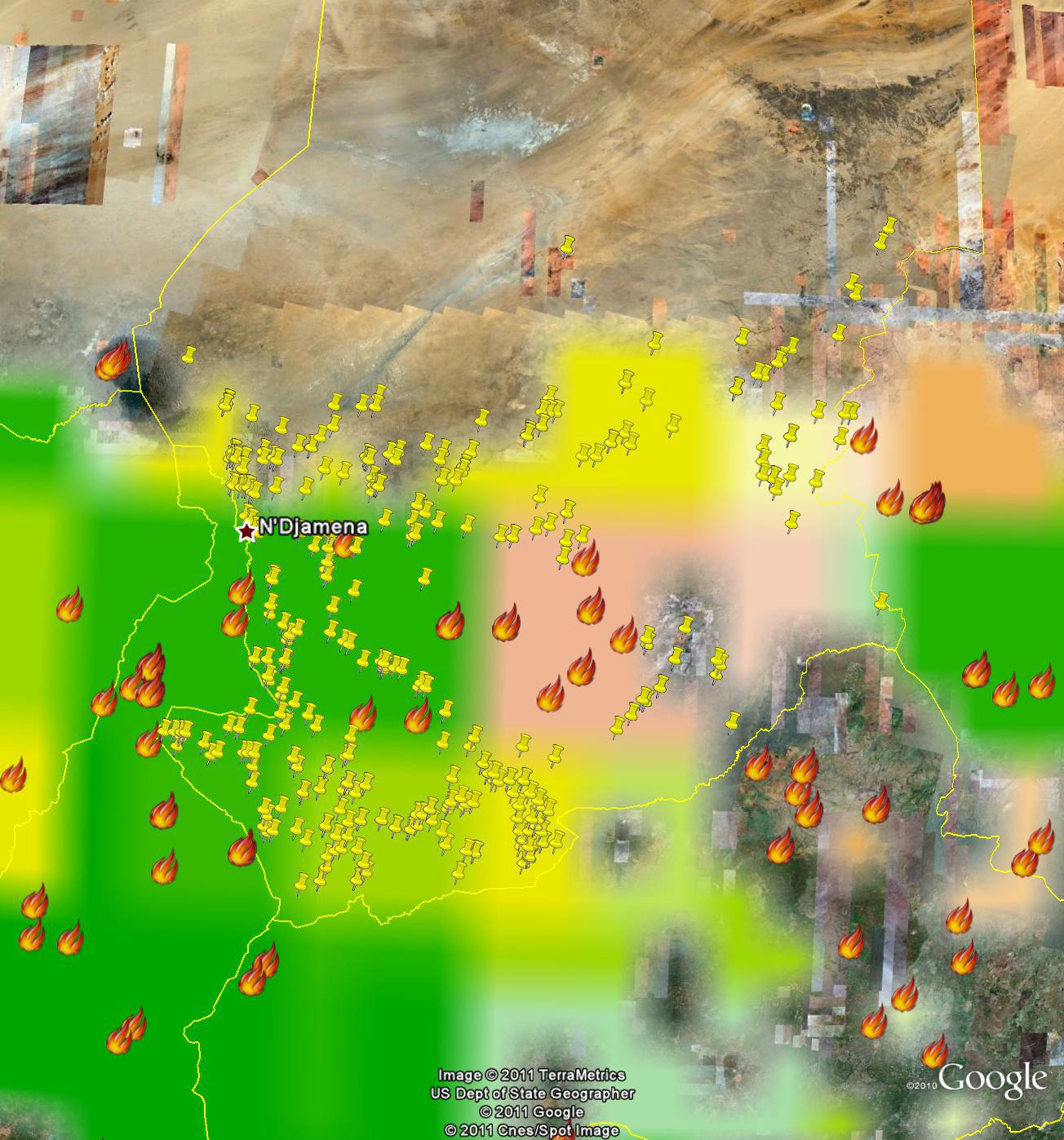
Which is a great thing to be able to do because as we have just had reconfirmed by our friend Dag Endresen, the origin of germplasm allows you to make some predictions about its performance.