Ghanaian buffet

Ghana has forty-seven different kinds of edible green leaves, each with a distinctive flavor.

I bet. And the diversity doesn’t stop there.

I think of Ghanaian cuisine as a kind of culinary jazz. The pepper, tomatoes, and onions, and possibly the oil, form the rhythm section. The stew is one musical form, like blues, the soup and one-pot dishes are others. Like a successful improvisation, the additional ingredients—vegetables, seeds and nuts, meat and fish—harmonize and combine into vibrant, mellow creations.

Dip into the sampler CD at Global Voices Online.
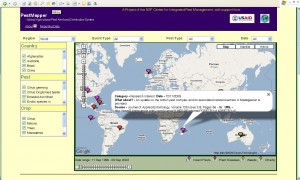
Reporting threats to agrobiodiversity: A modest proposal

Yesterday Hannes, à propos of something else, reminded me of a post I did a few months back about ProMED which asked the question “Why do we still not have an early warning system for genetic erosion?” Today I read about pestMapper — “[an] internet-based software tool for reporting and mapping biological invasions and other geographical and temporal events.” Whose objectives is basically to make a more participatory, Web 2.0-like ProMED. Coincidence? Maybe. Anyway, this is exactly the kind of thing we’ve been thinking here a “global genetic erosion threat reporting and monitoring portal” might look like. Any thoughts? An idea worth pursuing?

pest map

War of the roses

The oldest written testimony of the use of roses by humans originates from Mesopotamia. In the royal graves of Uruk, the cultural centre of the Sumerians (now ruins called Warka, in southern Iraq), Sir Leonard Wolley found cuneiform-script texts reporting on warfare by Sargon of Akkad (24th century BC) whose empire reached from western Persia to Asia Minor. Akkad crossed the Taurus mountains and brought back grapevines, figs, and roses…

Nibbles: Chicory symbolism, Watermelon disease, Olive documentation, Camassia quamash, Pig maps