- There are some African success stories, and a few even have to do with agriculture.
- TILLING tef.
- Some farmers’ groups in Asia don’t like hybrid rice. But some do, presumably. How come we never hear from those?
- Livestock trends deconstructed.
- The mother of all grapevine varieties found. Well, some varieties anyway.
- One of the foremost supporters of the System of Rice Intensification interviewed.
- Scientia Pro Publica, latest edition. There’s some nutrition stuff.
Mango madness
What is it with mangoes? One glorious post about the mother of all mangoes and suddenly they’re everywhere. Case in point. Visiting friends kindly brought me a jar of mango chutney. Fair enough, and much appreciated. But look closely at the label.
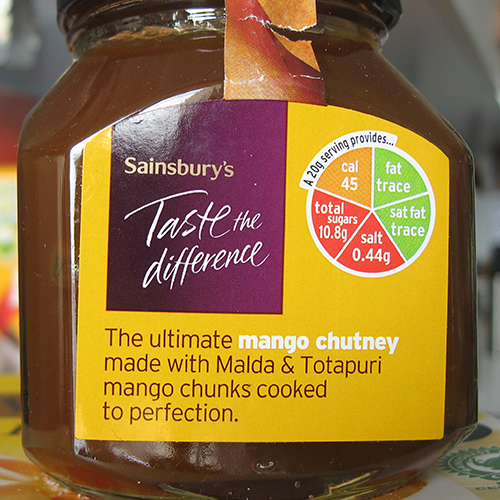
How many shoppers at Sainsbury are even aware that there are different varieties of mango? And do they, like me, rush to the interwebs to discover, for example, that Malda comes from around Malda in West Bengal, and that just last week there were further reports of urban development cutting into Malda mango plantations in Digha.? Search for Totapuri mango, by contrast, and you get lots of listings of people who want to sell you processed pulp. 1 I’m betting, then, that Sainsbury’s finest is mostly Totapuri with a smidgen of Malda thrown in. But I’m willing to be corrected. Not that there’s much real estate left on the label to do so.
Nibbles: Poppies, Breeding, American panmixis, Hemp, Bra, AnGR
- Breeders called on to save key Afghani crop. No, not really.
- GMOs not incompatible with organic, round 2.
- The Columbian Exchange. People though, not crops.
- USDA chief botanist was into Cannabis shock.
- Novel way of growing rice unveiled.
- Two livestock pdfs: What 2010 means for farm animal genetic resources conservation. And a book on European local breeds.
Nibbles: Allanblackia domestication, Rampion census, Mali reforestation, Indian sacred groves, Oysters, Seaweeds, Breeding organics, EMBRAPA, Fisheries bycatch, Writing NUS proposals, Nutrition mag, Biofortification
- Boffins trying to domesticate Allanblackia for its oil.
- Phyteuma spicatum must be saved, British folklore depends on it. How about domesticating it?
- Farmers replanting forest in inland Niger delta. Sort of domesticating the forest, you mean?
- And here’s another domesticated forest, this time in Kerala.
- Are oysters domesticated? And seaweeds? Lots of uses for seaweeds, after all.
- Why plant breeding is incompatible with organic agriculture. Eh? First of a trilogy.
- Management of plant genetic resources in Brazil deconstructed.
- Oh dear, now boffins say avoiding bycatch may not be good after all.
- CTA calls for research notes in preparation for proposal writing workshop on neglected and underutilized plants.
- New Sight and Life magazine is out, with interesting discussions of Vitamin A supplementation in newborns and HIV patients.
- While at Scidev.net HarvestPlus defends biofortified crops against charge of medicalizing micronutrient deficiency.
Nibbles: Sorghum, Microbes, Seeds, Biofortification, Spent grain, Fermentation, Fisheries, Millennium Villages, Cooking fish
- All the cool crops are doing it. Sorghum has a Facebook page. Any others?
- Soil microbes showing “increasing antibiotic resistance“.
- Big, expensive, new Seed Tech Institute for East Africa. I’m suspending judgement. h/t CAS-IP
- New Agriculturalist does the AgroSalud thing: biofortified staples.
- Speaking of which, you can biofortify chapatis with distillers grains. But what will the livestock eat?
- More fermentation goodness.
- Cobia is the new cod.
- Nutrition in the Millennium Villages.
- NW USA seafood recipes have moved up the foodchain in last 100 years, because rarer and more expensive.