- Getting the right seeds to Nepali farmers.
- An organic farmer visits the Vavilov Institute.
- Conservation: beyond hotspots, beyond markets.
- Letting the market deal with insect foods.
- Hybrids 101.
- Tamil Nadu women millet farmers show us all how it’s done. In Milan.
- Climate change? Let them eat rice bean.
- End of an era at the Land Institute.
- And the biggest environmental footprint goes to…lamb.
- Drought tolerance: a geneticist explains.
- International wheat meeting in the news.
- How does the European seed industry support crop diversity conservation and use? Let me map that for you.
Women and agrobiodiversity photo competition “winners” announced
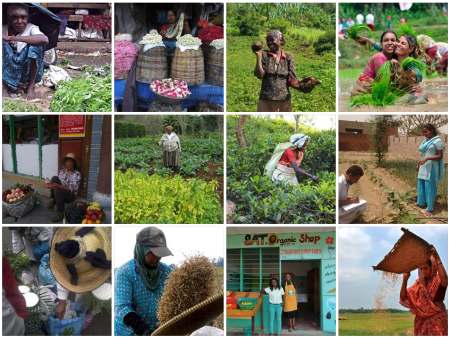
Yeah, well, in the end I didn’t win. But I’m not bitter. Not much.
Nibbles: Beautiful downtown Burbank, Oz rice weed and nuts, Teff embargo, Kew Gardens, Cherokee seeds, Vegetables semantics, MLN progress, Fishy chart, Inuit fishy diet, Bioversity photo fix, African food security, ICIPE cashes in, Root & tuber congress, Smallholders, EU agroecology, Sackville Hamilton, Kiwifruit history, USDA pathogen collection
- Luther Burbank “…was willing to cross just about anything that had leaves…”
- No, rice did not originate in northern Australia. Not in the sense those words are usually used.
- Aussies to embrace cannabis. But not in the sense those words are usually used.
- Australian exporters nuts for more than just macadamia. Ah, interdependence…
- Meanwhile, Ethiopian teff exporters licking their lips in anticipation.
- Kew is bigger than the sum of its parts.
- Cherokee Nation genebanker gets award.
- Yes, BBC, vegetables exist, let’s move on.
- Maize Lethal Necrosis on its last legs? Well, “progress is being made” at any rate.
- The Economist’s daily chart is on declining fish stocks. Why have they gone all warm and fuzzy lately? Something in the zeitgeist?
- Inuit are genetically adapted to their fishy diet.
- Damn it, I lost! Probably fixed.
- Africa sets up a new institution for food security. Which is not the same as hunger, we are told. But is it malnutrition.
- ICIPE scales up and out. More impact than any “new institution” is going to achieve.
- World Congress on Root & Tuber Crops has a new website.
- It’s the smallholders, stupid. Like the ones growing tea in Kenya, frinstance.
- The EU to discuss agroecology. Yesterday, alas.
- IRRI and Plant Treaty to share an IT-savvy genebank manager.
- How kiwifruit became kiwifruit.
- Microbes have collections too.
Nibbles: Drought maize, Forage Man, Coffee rescue, Herbarium workflow, Nutrient decline, Hybrid vines, Forest foods, Agrobiodiversity double, Bittman moves on
- So, how well did that Drought Tolerant Maize for Africa project do, anyway? Meeting to be held to find out. In the meantime, here’s the infographic.
- My friend Bob Reid gets an award for his contribution to forage genetic resources conservation and use.
- Finally doing something about arabica’s lack of diversity.
- Digitizing herbarium collections? There’s a workflow for that.
- Remember the good old days of nutritions veggies? “[A]ny real declines [in nutrient content] are generally most easily explained by changes in cultivated varieties.”
- “…what if hybrids were farmed as carefully & conscientiously as the finest vinifera grapes in a historical vineyard?”
- Wild foods from dry forests are good for you. Wet forest not totally useless either though.
- Bats, earthworms, enough of this biodiversity, we get it already.
- Bittman puts his money where his mouth is.
Nibbles: Kew video, Cannabis taxonomy, Diet change, School beer nazis, Pawnee corn, Salicornia, Oz seed forum, Cuban root forum
- Really stunning video on plant taxonomy through the ages.
- Growers often get cannabis taxonomy wrong. Where’s the video on that?
- Kale or steak? Why not both?
- Enterprising pupils make beer from oats/sorghum breakfast cereal.
- Can always do with more news on Pawnee corn.
- Let them eat Salicornia.
- Australian Seed Bank Partnership organizing a National Seed Science Forum in March 2016.
- The Instituto de Investigaciones de Viandas Tropicales is organizing the Third International Symposium on Roots, Rhizomes, Tubers, Plantains, Bananas and Papayas in Cuba, 20-23 October 2015.